SIBO vs IBS: How to Tell the Difference
 78
78
Digestive issues can significantly impact your quality of life, making everyday activities more challenging and uncomfortable. Among the most commonly discussed digestive conditions are Small Intestinal Bacterial Overgrowth (SIBO) and Irritable Bowel Syndrome (IBS). While these conditions share many similar symptoms, they are not the same. Understanding the differences between SIBO and IBS is essential for finding the right treatment and achieving long-term digestive health.
In recent years, healthcare practitioners have gained a deeper understanding of the connection between SIBO and IBS, leading to more accurate diagnoses and targeted treatment approaches. If you experience chronic bloating, abdominal discomfort, or irregular bowel habits, learning the distinctions between these conditions may help you take the next step toward relief.
What Is IBS?
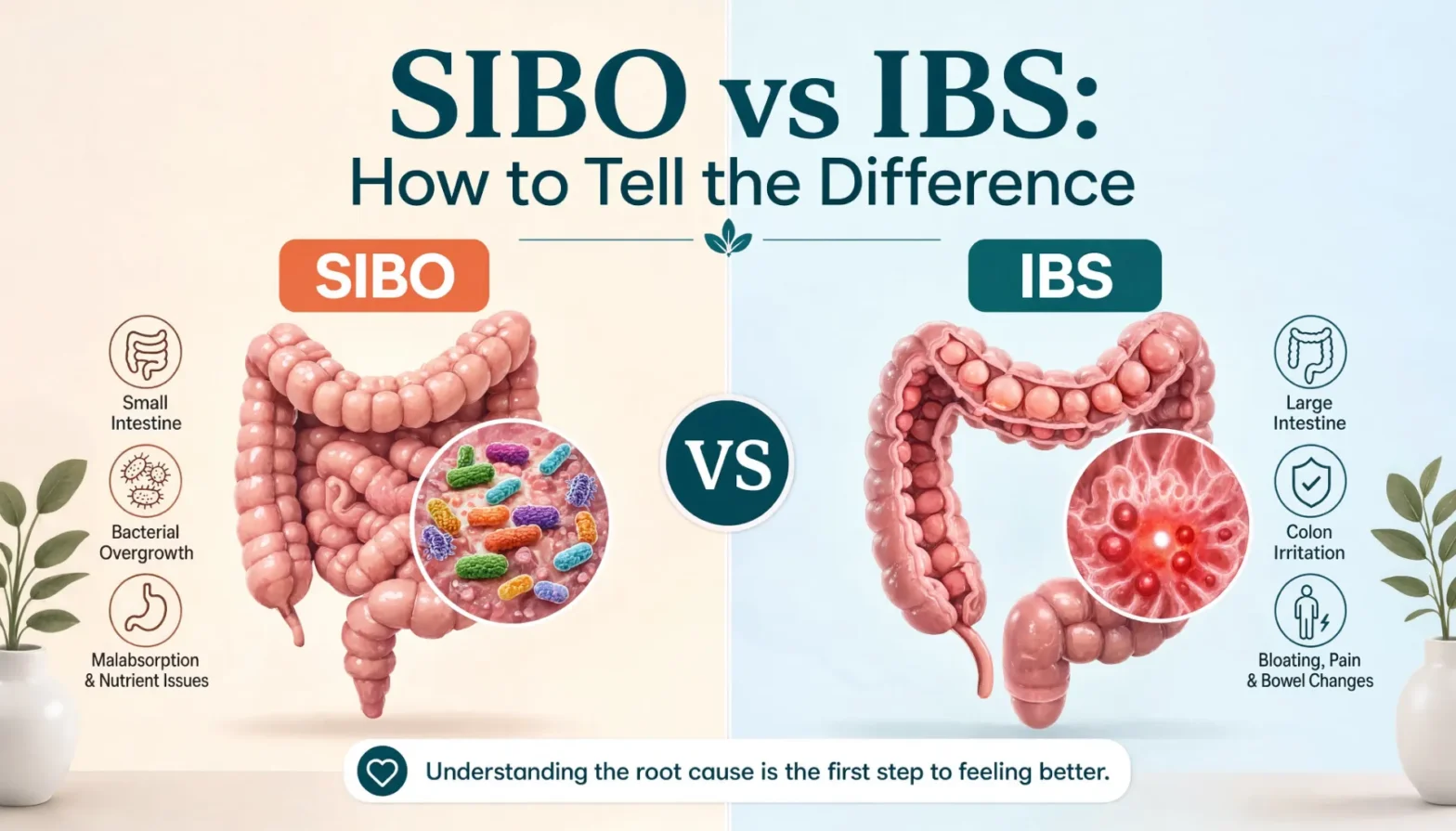
Irritable Bowel Syndrome (IBS) is a functional gastrointestinal disorder that affects the large intestine. It is characterized by a collection of digestive symptoms without any visible structural abnormalities in the digestive tract.
Common symptoms of IBS include:
- Abdominal pain or cramping
- Bloating
- Excess gas
- Diarrhea
- Constipation
- Alternating diarrhea and constipation
- Changes in bowel habits
- Mucus in the stool
IBS is considered a chronic condition that often requires long-term management. Symptoms can vary significantly from person to person and may be triggered by stress, certain foods, hormonal changes, or other lifestyle factors.
What Is SIBO?
Small Intestinal Bacterial Overgrowth (SIBO) occurs when excessive bacteria grow in the small intestine, an area where bacterial populations are normally much lower than in the large intestine.
These bacteria ferment carbohydrates from food before they can be properly absorbed, producing gases such as hydrogen and methane. This process can lead to a variety of digestive symptoms and may interfere with nutrient absorption.
Common symptoms of SIBO include:
- Persistent bloating
- Abdominal discomfort
- Excessive gas
- Diarrhea
- Constipation
- Nausea
- Food sensitivities
- Fatigue
- Nutrient deficiencies
- Brain fog
Because many of these symptoms overlap with IBS, SIBO is often overlooked or misdiagnosed.
Why SIBO and IBS Are Often Confused
One of the biggest challenges in digestive health is that SIBO and IBS can appear almost identical.
Both conditions commonly cause:
- Bloating
- Gas
- Abdominal pain
- Diarrhea
- Constipation
- Digestive discomfort after meals
Historically, many individuals experiencing these symptoms received an IBS diagnosis without further investigation. However, research has shown that a significant percentage of people diagnosed with IBS may actually have underlying bacterial overgrowth contributing to their symptoms.
This overlap has led many healthcare providers to evaluate patients for SIBO when conventional IBS treatments fail to provide adequate relief.
Key Differences Between SIBO and IBS
Although symptoms may overlap, several important differences can help distinguish the two conditions.
IBS Is a Syndrome
IBS is considered a syndrome, meaning it is a collection of symptoms rather than a single identifiable cause. Multiple factors may contribute to IBS, including:
- Gut-brain axis dysfunction
- Stress
- Food sensitivities
- Changes in gut motility
- Altered gut microbiome
Because IBS can have various contributing factors, treatment often focuses on symptom management.
SIBO Has an Identifiable Cause
SIBO involves a measurable overgrowth of bacteria in the small intestine. This bacterial imbalance can often be detected through specialized testing and addressed with targeted treatment strategies.
Common contributing factors to SIBO include:
- Reduced intestinal motility
- Previous food poisoning
- Structural abnormalities
- Chronic stress
- Certain medications
- Digestive disorders
Because SIBO has a specific underlying mechanism, treatment often aims to address the bacterial overgrowth directly.
Signs Your Symptoms May Be Related to SIBO
While only proper testing can confirm a diagnosis, several signs may suggest that SIBO is contributing to your symptoms.
Severe Bloating After Meals
Many individuals with SIBO experience significant bloating shortly after eating, particularly after consuming carbohydrates.
Food Intolerances
People with SIBO often notice increased sensitivity to foods that were previously well tolerated.
Nutrient Deficiencies
Because bacterial overgrowth can interfere with nutrient absorption, some individuals develop deficiencies in vitamins and minerals.
Brain Fog and Fatigue
The effects of bacterial fermentation and inflammation may contribute to fatigue, difficulty concentrating, and mental fogginess.
Poor Response to Standard IBS Treatments
If traditional IBS management strategies have not improved your symptoms, further evaluation for SIBO may be beneficial.
The Importance of Proper Testing
Accurate diagnosis is essential because treatment approaches differ significantly between IBS and SIBO.
One of the most commonly used diagnostic tools is the SIBO breath test Canada practitioners frequently recommend. This non-invasive test measures hydrogen and methane gas production after consuming a specific sugar solution.
Elevated gas levels may indicate bacterial overgrowth in the small intestine and help guide treatment decisions.
Testing can provide valuable information that helps practitioners distinguish between SIBO and other digestive disorders.
How SIBO Is Treated
Treatment for SIBO typically involves addressing bacterial overgrowth while supporting overall digestive function.
Depending on the individual’s needs, a personalized SIBO treatment plan may include:
- Dietary modifications
- Antimicrobial support
- Gut-healing protocols
- Nutritional support
- Motility support strategies
- Lifestyle modifications
The goal is not only to reduce bacterial overgrowth but also to address the underlying factors that allowed the imbalance to develop.
How IBS Is Managed
Because IBS can have multiple contributing factors, treatment often requires a comprehensive approach.
Management strategies may include:
- Dietary adjustments
- Stress management techniques
- Physical activity
- Sleep optimization
- Gut health support
- Trigger identification
Many individuals benefit from working with an experienced ibs naturopath who can help identify factors contributing to ongoing digestive symptoms and develop a personalized wellness plan.
The Role of Naturopathic Care
Digestive conditions are rarely one-size-fits-all. A naturopathic approach focuses on identifying and addressing the root causes contributing to symptoms.
For individuals experiencing persistent bloating, gas, and digestive discomfort, a sibo naturopath may evaluate:
- Digestive function
- Nutrient status
- Gut microbiome balance
- Lifestyle factors
- Stress levels
- Food sensitivities
This comprehensive assessment can help create a customized treatment plan that supports long-term digestive health.
Similarly, those seeking support for IBS may benefit from working with a naturopath ibs practitioner who can provide individualized recommendations aimed at improving overall gut function and symptom management.
When Should You Seek Professional Help?
Occasional digestive discomfort is common, but persistent symptoms should not be ignored.
Consider seeking professional evaluation if you experience:
- Chronic bloating
- Frequent abdominal pain
- Ongoing diarrhea or constipation
- Unexplained fatigue
- Food intolerances
- Nutrient deficiencies
- Symptoms that interfere with daily life
Early assessment may help identify underlying causes and prevent symptoms from worsening over time.
If you’ve been searching for a sibo naturopath near me, working with a qualified practitioner can provide valuable guidance and support throughout the diagnostic and treatment process.
Can You Have Both SIBO and IBS?
Yes. In fact, many individuals diagnosed with IBS may also have SIBO. The relationship between these conditions is complex, and researchers continue to study how they interact.
For some people, bacterial overgrowth may be a contributing factor behind IBS symptoms. In these cases, identifying and addressing SIBO may lead to significant improvements in digestive health.
Because symptoms overlap so closely, proper testing and comprehensive evaluation are often necessary to determine the most appropriate treatment strategy.
Conclusion
Although SIBO and IBS share many similar symptoms, they are distinct conditions with different underlying causes. IBS is a functional digestive disorder characterized by ongoing gastrointestinal symptoms, while SIBO involves excessive bacterial growth in the small intestine that can often be identified through specialized testing.
Understanding the differences between these conditions is an important step toward finding effective relief. If you experience persistent bloating, digestive discomfort, food sensitivities, or irregular bowel habits, a thorough evaluation can help uncover the root cause of your symptoms.
With proper assessment, personalized care, and targeted treatment strategies, many individuals can successfully manage their digestive health and improve their quality of life. Whether your symptoms are related to IBS, SIBO, or a combination of both, obtaining the right diagnosis is the foundation for lasting digestive wellness.
References (The references should include everything but the link)
Journal of the Canadian Association of Gastroenterology – IBS Guideline
https://academic.oup.com/jcag/article/2/1/6/5290372
Canadian Association of Gastroenterology (CAG). Clinical Practice Guideline for the Management of Irritable Bowel Syndrome (IBS). Journal of the Canadian Association of Gastroenterology. 2019.
https://academic.oup.com/jcag/article/2/1/6/5290372
Canadian Society of Intestinal Research (CSIR). Irritable Bowel Syndrome (IBS).
https://badgut.org/information-centre/a-z-digestive-topics/irritable-bowel-syndrome/
Pimentel M, Saad RJ, Rao SSC, et al. ACG Clinical Guideline: Small Intestinal Bacterial Overgrowth. The American Journal of Gastroenterology. 2020.
https://journals.lww.com/ajg/fulltext/2020/02000/acg_clinical_guideline__small_intestinal_bacterial.9.aspx
Canadian Association of Gastroenterology Clinical Practice Guideline for the Management of Irritable Bowel Syndrome (IBS)