
How Gut Health May Be Contributing to Your Eczema
 326
326
Eczema is usually thought of as a skin condition.
Dry skin. Itching. Redness. Rashes. Flares.
But for many people, eczema may not be only a skin issue.
Your gut health, immune system, inflammation levels, food reactions, and nutrient status may all play a role in how your skin behaves.
This does not mean every eczema case is caused by the gut. However, if you struggle with digestive symptoms, food sensitivities, constipation, bloating, or eczema that flares after certain meals, your gut may be an important piece of the puzzle.
The Gut-Skin Connection
Your gut and skin are closely connected.
This is often called the gut-skin axis.
Your gut helps regulate:
- Inflammation
- Immune function
- Nutrient absorption
- Hormone metabolism
- Detoxification pathways
- Microbiome balance
When gut health is off, the immune system may become more reactive.
For someone with eczema, this may show up as more itching, redness, dryness, or inflammation.
1. Gut Dysbiosis
Gut dysbiosis means there is an imbalance in the gut microbiome.
This may include:
- Too little beneficial bacteria
- Too much inflammatory bacteria
- Low microbial diversity
- Poor short-chain fatty acid production
- Yeast or bacterial overgrowth
This matters because your gut bacteria help “train” your immune system.
When the microbiome is imbalanced, the immune system may become more inflamed or reactive.
For people with eczema, this may contribute to more frequent flares, stronger food reactions, or slower skin healing.
2. Increased Gut Permeability
Your gut lining acts like a barrier.
It decides what should enter the bloodstream and what should stay out.
When this barrier becomes irritated or weakened, the immune system may be exposed to more inflammatory compounds.
This is sometimes called increased gut permeability or “leaky gut”.
Possible contributors include:
- Chronic stress
- Poor diet
- Alcohol
- Gut infections
- Food sensitivities
- Low fiber intake
- Certain medications
- Microbiome imbalance
When the gut barrier is compromised, the immune system may become more activated.
In eczema, this may contribute to more inflammation in the skin.
3. Food Sensitivities
Many people with eczema notice that certain foods seem to trigger their skin.
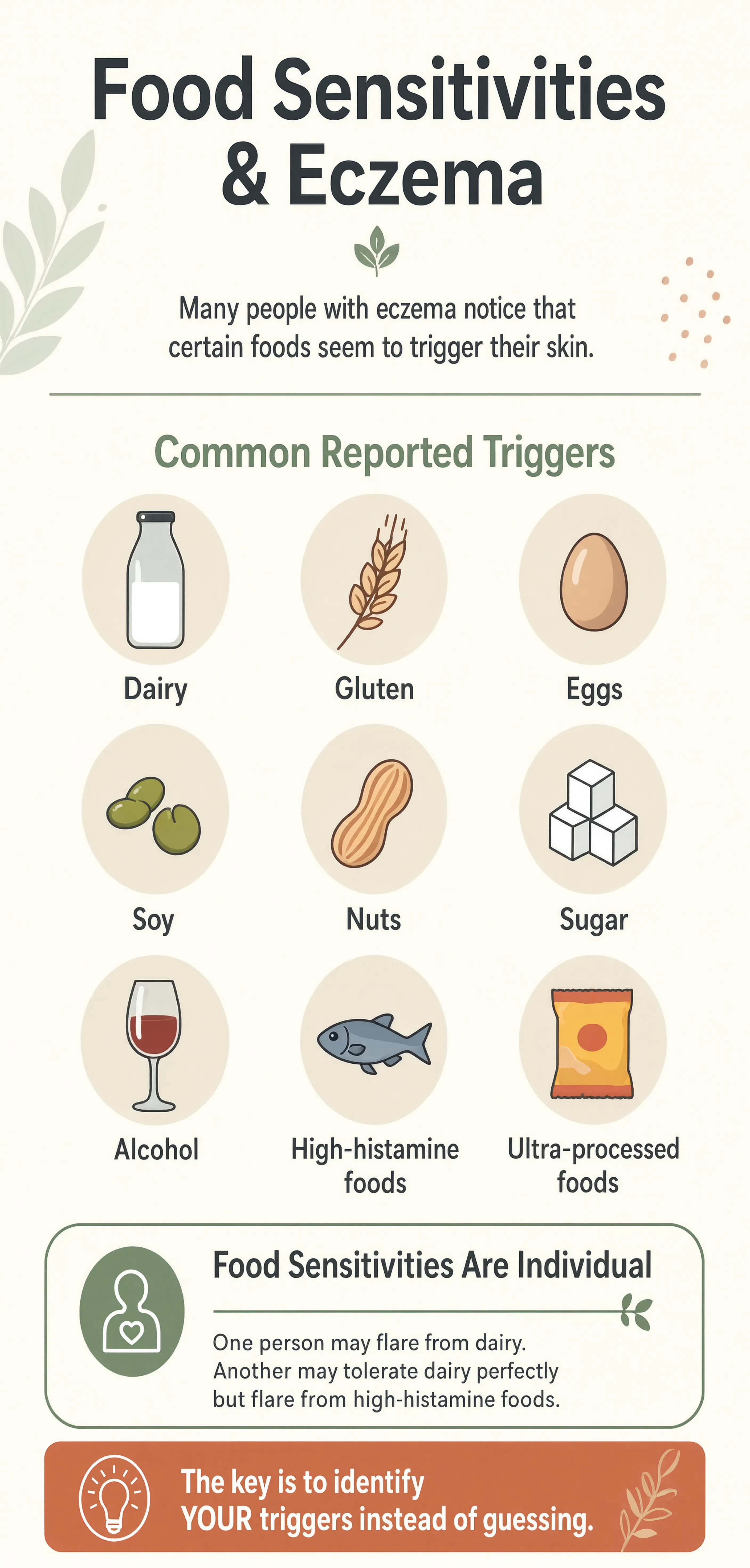
Common reported triggers include:
- Dairy
- Gluten
- Eggs
- Soy
- Nuts
- Sugar
- Alcohol
- High-histamine foods
- Ultra-processed foods
However, this does not mean everyone with eczema needs to cut out all of these foods.
Food sensitivities are individual.
One person may flare from dairy.
Another may tolerate dairy perfectly but flare from high-histamine foods.
The key is to identify your triggers instead of guessing.
4. Poor Digestion
If your digestion is off, your skin may be affected too.
Digestive symptoms can include:
- Bloating
- Gas
- Burping
- Reflux
- Nausea
- Constipation
- Diarrhea
- Undigested food in stool
- Feeling heavy after meals
Poor digestion may affect how well you break down and absorb nutrients.
This matters because your skin needs nutrients to repair, rebuild, and calm inflammation.
5. Nutrient Deficiencies
Your skin needs key nutrients to stay healthy.
Important skin nutrients include:
- Zinc
- Vitamin D
- Vitamin A
- Vitamin C
- Iron
- B vitamins
- Omega-3 fatty acids
If your gut is not absorbing nutrients properly, your skin may struggle to heal.
Possible signs of nutrient issues include:
- Slow wound healing
- Fatigue
- Hair shedding
- Brittle nails
- Cracks at the corners of the mouth
- Frequent infections
- Dry skin
- Poor recovery
This is one reason gut health and nutrient status often need to be considered together.
6. Constipation
Constipation is commonly overlooked in eczema.
Healthy elimination is important for removing waste products from the body.
If you are not having regular bowel movements, it may be a sign that your digestion needs support.
Constipation may be linked to:
- Low fiber intake
- Low water intake
- Low magnesium
- Poor gut motility
- Stress
- Low thyroid function
- Microbiome imbalance
For some, improving bowel regularity can be a helpful foundational step.
7. Low Fiber Intake
Fiber feeds your beneficial gut bacteria.
Your gut bacteria use fiber to produce compounds called short-chain fatty acids.
These compounds help support:
- Gut barrier health
- Immune balance
- Inflammation control
- Regular bowel movements
- Microbiome diversity
Many people with eczema end up eating very restrictive diets.
This can sometimes lead to lower fiber intake and less microbiome diversity.
Fiber-rich foods include:
- Vegetables
- Fruits
- Oats
- Lentils
- Beans
- Chia seeds
- Flaxseed
- Quinoa
- Sweet potatoes
8. High Sugar and Processed Foods
Sugar and ultra-processed foods may negatively affect gut health.
These foods may contribute to:
- Blood sugar spikes
- Inflammation
- Cravings
- Poor microbiome balance
- More itching in some people
- Slower skin healing
Common examples include:
- Candy
- Soda
- Pastries
- Cookies
- Chips
- Fast food
- Sugary cereals
- Sweetened drinks
This does not mean you need a perfect diet.
But reducing processed foods and building a stronger nutrition foundation may help support both your gut and skin.
9. Stress and the Gut
Stress affects more than your mind.
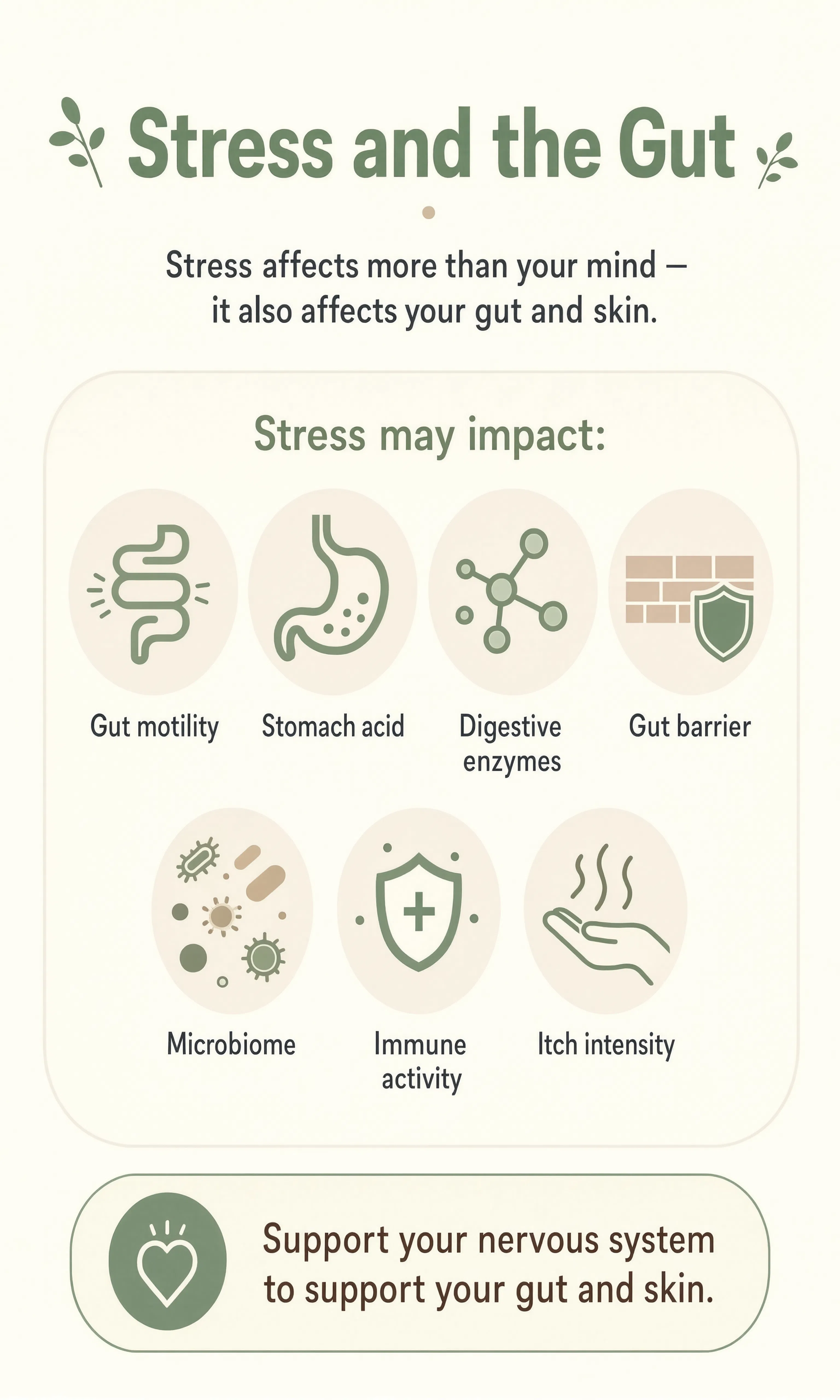
It can also affect your gut and skin.
Stress may impact:
- Gut motility
- Stomach acid
- Digestive enzyme release
- Gut barrier function
- Microbiome balance
- Immune system activity
- Itch intensity
This is why some people flare during stressful seasons, even when their diet has not changed.
Supporting the nervous system is part of supporting the gut-skin connection.
10. Antibiotic History
Antibiotics can be necessary and helpful.
However, repeated antibiotic use may affect the gut microbiome.
This may be relevant if your eczema started or worsened after:
- Frequent antibiotics
- Childhood antibiotic use
- Acne antibiotics
- Recurrent infections
- Travel-related gut infections
This does not mean antibiotics are “bad.”
It simply means the microbiome may need extra support afterward.
Signs Your Gut May Be Involved in Your Eczema
Your gut may be worth exploring if you have eczema plus:
- Bloating
- Gas
- Constipation
- Diarrhea
- Reflux
- Food sensitivities
- Histamine reactions
- Fatigue after eating
- Sugar cravings
- Undigested food in stool
- Bad breath
- Coated tongue
- Frequent yeast infections
- Skin flares after meals
- Eczema that worsens with stress
These signs do not prove your gut is the cause.
But they may suggest your gut is contributing.
How to Support Gut Health for Eczema
Here are some simple places to start.
Increase Fiber Slowly
Fiber supports your gut bacteria and bowel movements.
Start with simple options like:
- Ground flaxseed
- Chia seeds
- Oats
- Berries
- Cooked vegetables
- Sweet potato
- Squash
Support Daily Bowel Movements
Foundational habits include:
- Drinking enough water
- Walking daily
- Eating enough fiber
- Managing stress
- Eating regular meals
- Getting enough magnesium-rich foods
Track Food Triggers
Use a food and symptom diary.
Track:
- Meals
- Snacks
- Drinks
- Itch levels
- Skin flares
- Bloating
- Bowel movements
- Sleep
- Stress
Look for patterns over time.
Do not panic over one random flare.
Reduce Processed Foods
Focus on adding more whole foods first.
Simple swaps include:
- Fruit instead of candy
- Water instead of soda
- Home-cooked meals instead of fast food
- Oats instead of sugary cereal
- Whole-food snacks instead of packaged snacks
Consider Testing
If symptoms are persistent, testing may help.
Depending on the person, this may include:
- Vitamin D
- Iron/ferritin
- B12
- Zinc
- Thyroid markers
- Celiac screening
- Stool testing (GI-MAP)
- SIBO breath testing
Testing is not always needed.
But it can be helpful when symptoms are confusing or not improving.
Final Thoughts
Eczema is complex.
It can involve the skin barrier, immune system, genetics, stress, allergens, hormones, environment, and gut health.
For some people, the gut may be one of the biggest missing pieces.
If you have eczema along with bloating, constipation, food reactions, poor digestion, or frequent flares after eating, it may be worth looking deeper into your gut health.
Our naturopathic doctorshave a special focus on skin health. We offer virtual consultations all across Ontario, feel free to book a virtual call today.
References
- Lee, S. Y., Lee, E., Park, Y. M., & Hong, S. J. (2018). Microbiome in the Gut-Skin Axis in Atopic Dermatitis. Allergy, Asthma & Immunology Research, 10(4), 354–362.
- Cochrane. (2018). Probiotics for treating eczema.
- Kim, J. E., Kim, H. S., & Lee, Y. (2025). Skin and gut microbiome in atopic dermatitis: mechanisms and therapeutic opportunities. Frontiers in Immunology.