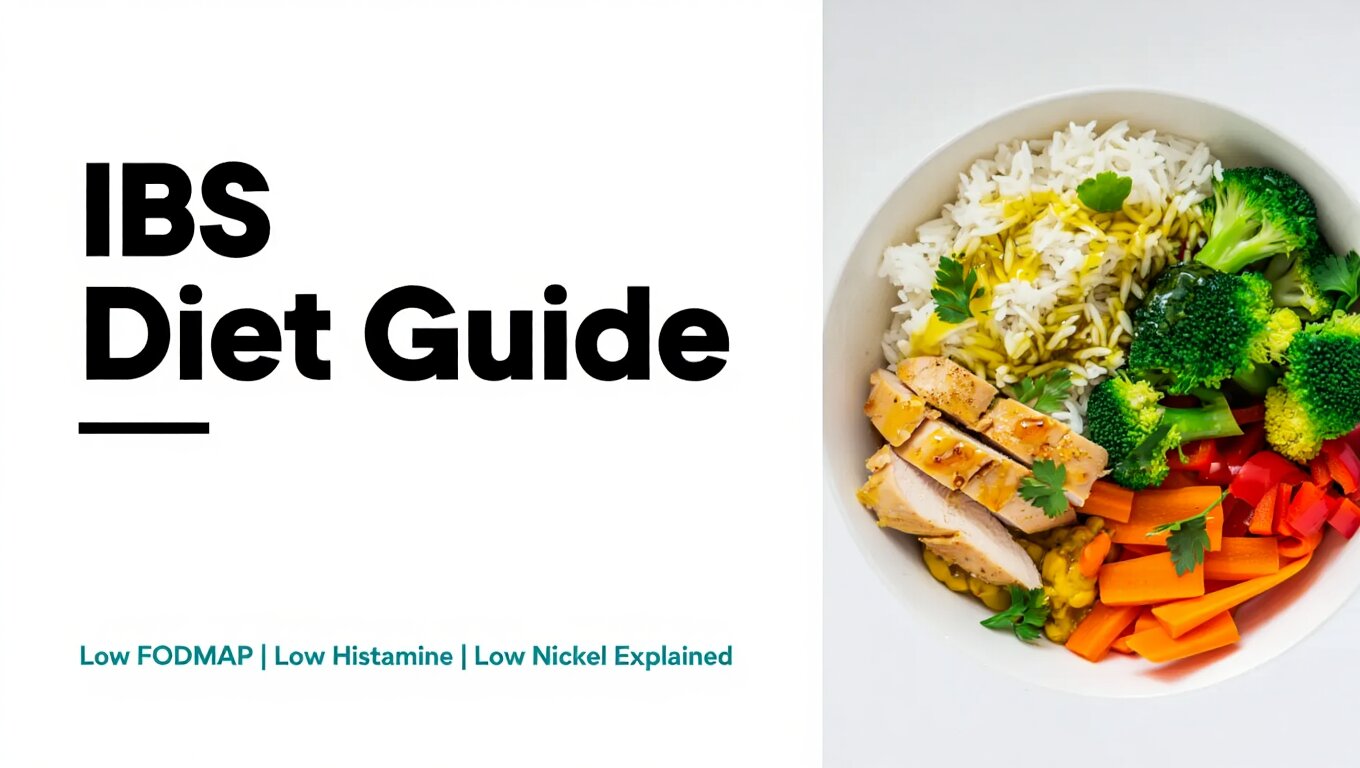
IBS Diet Guide: Low FODMAP, Low Histamine & Low Nickel Explained
 112
112
Living with irritable bowel syndrome (IBS) can be very difficult. You eat something that seemed perfectly fine last week, and today it sends you rushing to the bathroom or leaves you doubled over with cramping and bloating. If this sounds familiar, you are not alone. IBS affects roughly 10–15% of people worldwide, and diet is one of the most powerful tools we have to manage it.
At 8 wellness, a Naturopath IBS approach focuses on identifying your unique triggers rather than applying a generic solution. We work with patients to uncover root causes because IBS is not a one-size-fits-all condition. Three dietary approaches that come up frequently in our practice are the Low FODMAP diet, the low histamine diet, and the low nickel diet. Each targets a different underlying mechanism that can drive IBS symptoms.
What Is IBS and Why Does Diet Matter?
IBS is a functional gastrointestinal disorder characterized by recurring abdominal pain, bloating, and altered bowel habits, which can range from diarrhea (IBS-D) to constipation (IBS-C) or a mix of both (IBS-M). Unlike inflammatory bowel disease (IBD), IBS does not cause visible damage to the digestive tract, but it can significantly affect quality of life.
The gut-brain axis, gut microbiome imbalances, visceral hypersensitivity, and food sensitivities all play a role in IBS. This is why working with an IBS naturopath can be especially helpful, as diet and lifestyle interventions are tailored to your body’s specific needs.
The Low FODMAP Diet
The Low FODMAP diet is the most well-researched dietary intervention for IBS, with strong evidence supporting its effectiveness in reducing symptoms for up to 75% of patients.
What Are FODMAPs?
FODMAP stands for Fermentable Oligosaccharides, Disaccharides, Monosaccharides, and Polyols, a group of short-chain carbohydrates that are poorly absorbed in the small intestine. When they reach the large intestine, gut bacteria ferment them rapidly, producing gas and drawing water into the bowel. For people with IBS, this process is especially disruptive.
High FODMAP Foods to Limit
- Wheat and rye (fructans)
- Garlic and onions (fructans)
- Legumes and lentils (galactooligosaccharides)
- Cow’s milk and soft cheeses (lactose)
- Apples, pears, and stone fruits (fructose/sorbitol)
- Mushrooms and cauliflower (polyols)
How It Works
The Low FODMAP diet is typically done in three phases: elimination (2–6 weeks), reintroduction, and personalization. A naturopath IBS strategy ensures this process is done safely and effectively, helping you identify triggers without unnecessary long-term restrictions.
The Low Histamine Diet
Histamine is a naturally occurring compound involved in immune responses, digestion, and the nervous system. When histamine accumulates, it can trigger symptoms that closely mimic IBS.
Who Might Benefit?
Histamine intolerance may be a contributing factor if symptoms include bloating and diarrhea along with headaches, skin flushing, nasal congestion, or heart palpitations.
High Histamine Foods to Reduce
- Aged cheeses (Parmesan, cheddar, brie)
- Fermented foods (kimchi, kombucha, vinegar)
- Processed meats (salami, bacon)
- Canned fish (tuna, sardines)
- Tomatoes, spinach, eggplant, avocado
- Alcohol (especially wine and beer)
What to Know Before Starting
The low histamine diet is best used short term (4–8 weeks) as a diagnostic tool. Working with an IBS naturopath helps ensure proper guidance, testing, and reintroduction strategies.
The Low Nickel Diet
Nickel is a trace mineral found naturally in many plant foods. While most people tolerate it well, some individuals may experience IBS-like symptoms due to sensitivity.
Systemic Nickel Allergy Syndrome (SNAS)
SNAS occurs when ingested nickel triggers immune-related inflammation, leading to bloating, abdominal pain, and diarrhea.
High Nickel Foods to Limit
- Whole grains (oats, whole wheat)
- Legumes (lentils, chickpeas, soybeans)
- Nuts and seeds
- Chocolate and cocoa
- Leafy greens (spinach, kale)
- Canned foods
Is This Diet Right for You?
The low nickel diet is typically considered if other approaches have not worked or if you have a known nickel allergy.
How to Choose the Right Approach for You
There is no single IBS diet that works for everyone. Many patients experience overlapping sensitivities.
- Start with Low FODMAP if: You experience bloating, gas, diarrhea, or constipation
- Consider Low Histamine if: You have additional symptoms like headaches or skin reactions
- Explore Low Nickel if: You have a known allergy or persistent symptoms despite other diets
These approaches can also be combined strategically. Working with a qualified practitioner ensures you avoid unnecessary restrictions and maintain proper nutrition.
🌿 Ready to find your IBS triggers? Book a consultation at 8 Wellness and work with Dr. Sanam Arora, ND, to create a personalized diet and treatment plan that fits your life.
References
- Staudacher, H.M., & Whelan, K. (2017). The low FODMAP diet: recent advances in understanding its mechanisms and efficacy in IBS. Gut, 66(8), 1517–1527. https://doi.org/10.1136/gutjnl-2017-313750
- Gibson, P.R., & Shepherd, S.J. (2010). Evidence-based dietary management of functional gastrointestinal symptoms: The FODMAP approach. Journal of Gastroenterology and Hepatology, 25(2), 252–258. https://doi.org/10.1111/j.1440-1746.2009.06149.x
- Maintz, L., & Novak, N. (2007). Histamine and histamine intolerance. The American Journal of Clinical Nutrition, 85(5), 1185–1196. https://doi.org/10.1093/ajcn/85.5.1185
- Enko, D., et al. (2018). Concomitant prevalence of low serum diamine oxidase activity and carriage of DAO gene single nucleotide polymorphisms in patients with gastrointestinal complaints. Clinical Biochemistry, 56, 28–34. https://doi.org/10.1016/j.clinbiochem.2018.04.007
- Borghini, R., et al. (2020). New insights in IBS-like disorders: Pandora’s box has been opened; a review. Gastroenterology & Hepatology from Bed to Bench, 13(2), 85–95. PMID: 32190225
- Sciberras, M., et al. (2019). Dietary nickel intake and gastrointestinal symptoms in irritable bowel syndrome—a controlled study. Nutrients, 11(12), 2878. https://doi.org/10.3390/nu11122878
- Monsbakken, K.W., et al. (2006). Perceived food intolerance in subjects with irritable bowel syndrome—etiology, prevalence and consequences. European Journal of Clinical Nutrition, 60, 667–672. https://doi.org/10.1038/sj.ejcn.1602367